
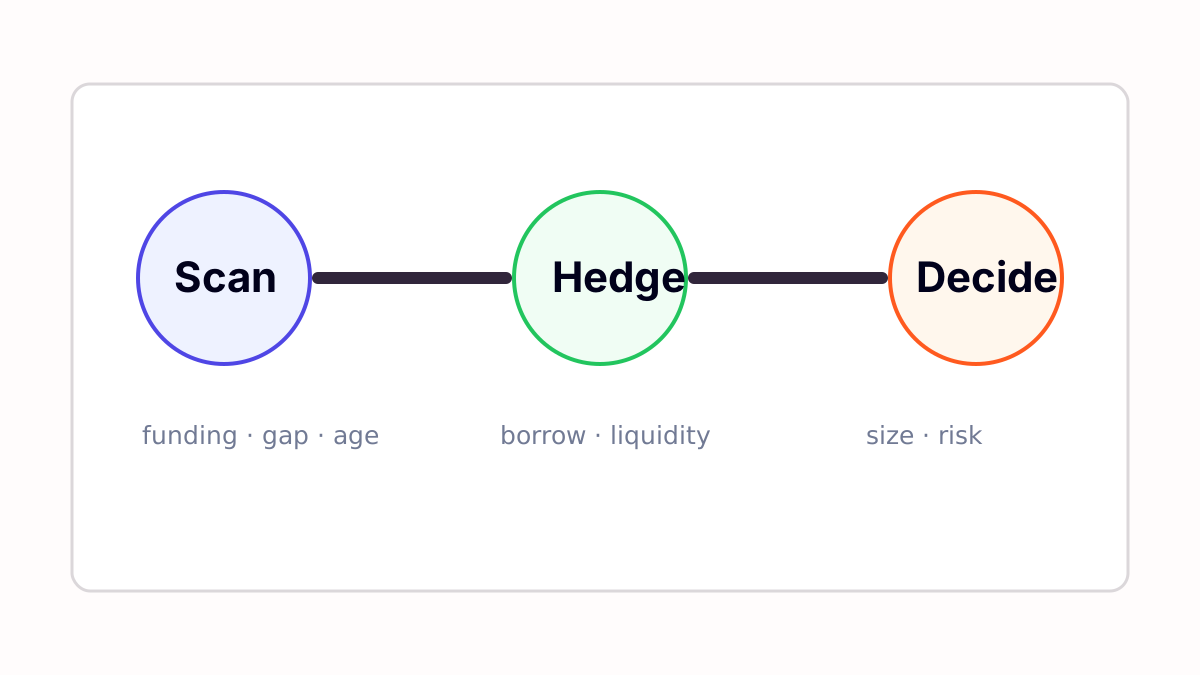
A delta-neutral scanner is useful because it reduces the market to a short list of things worth checking. The first pass is mechanical: sort by estimated net yield, confirm funding rate APR, inspect price difference, and reject stale data. The second pass is manual: open the perp venue, open the hedge venue, and confirm that both sides can be executed at realistic prices.
The workflow should stay boring. Scan first, verify second, size last. If the hedge quote is old, ignore the row. If the perp book is too thin, ignore the row. If borrow is unknown, reduce confidence. Good arbitrage monitoring is not about pressing every signal. It is about building a repeatable process that avoids obvious false positives and leaves only setups that justify deeper execution work.
Workflow steps
- Rank by estimated net yield and data age.
- Open both venues and verify executable prices.
- Decide sizing only after liquidity and borrow checks.